Antwerpen · Est. 1944 · Entirely invented
A house that makes very little, and keeps making it.
Thirty-one pieces, cut to order in one workroom on the Kloosterstraat. Cloth is chosen before the drawing. Every edge is closed by hand.
None of which is true. Lievaert has never existed. Read on anyway — the shop works, and everything in it is free.
No form, no email. Play money, placed at your disposal the moment you click.
What this is
There is no house.
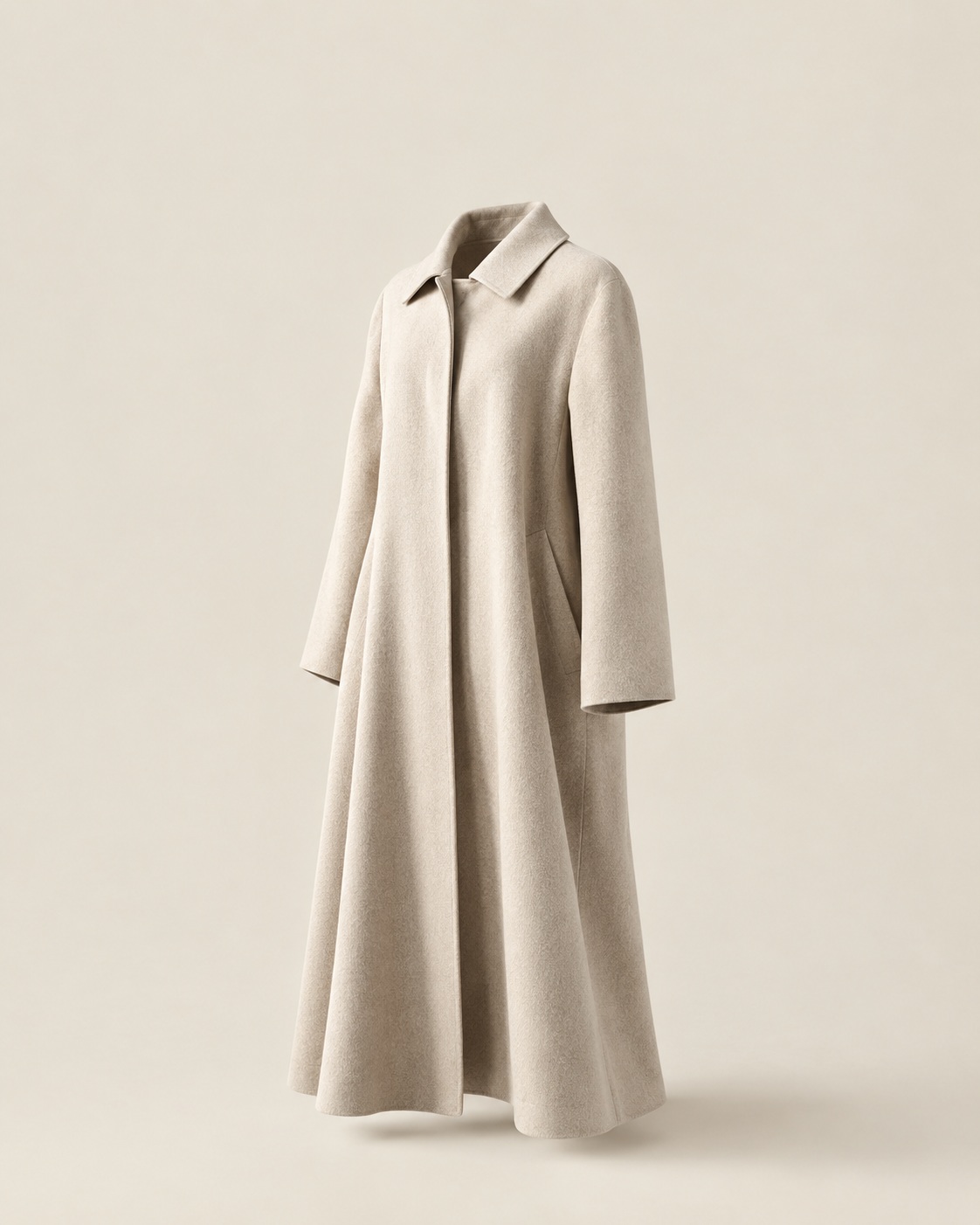
There is no atelier on the Kloosterstraat. There was no Jozef, no Marthe, no Anneke. The archive of 4,180 patterns does not exist, the coats are generated images, and the prices were invented by someone who has never sold a coat in his life.
What does work is the shop. You open an account, the house grants you as much money as you ask for — it is play money, it costs nothing, and there is no card field anywhere on this site — and then you spend it. You pick sizes. You fill a bag. You settle the bill and keep the receipt. Nothing is made, nothing is charged, nothing arrives.
It is the part of shopping that was always free: choosing.
Jozef Lievaert opened the workroom in November 1944, eleven weeks after the city was liberated and while the rockets were still falling on it. He had spent the war turning collars and rebuilding coats that were already decades old, and took from that the only rule the house has ever had: make the thing so that it can be mended in forty years.
Three generations later the room holds eleven people. Six cut and sew, two work leather, one does nothing but edges, and two keep the archive — every pattern the house has drawn since 1952, filed by year and pulled again whenever a client wants the coat their mother had.
- AtelierKloosterstraat 118, Antwerpen — by appointment
- OutputRoughly 400 pieces a year
- Archive4,180 patterns, 1952 to now
- RepairsWithout charge, for the life of the piece
- MarkingNo logo appears on any garment
Selected pieces
On the floor
Private clients — since 1947
The house keeps an account in your name.
Lievaert has never taken a card at the counter. Clients place a sum on reserve with the house and the atelier draws against it as work is finished — the arrangement Marthe Lievaert wrote into the first ledger in 1947, when there was cloth to be bought and nobody had the money for it at the moment of asking.
Membership carries the archive with it: any pattern cut since the founding can be called up and made again to your own measurements. Repairs are without charge, for as long as the piece exists.
How an order runs
- OneOpen an account with the house.
- TwoPlace a sum on reserve against future work.
- ThreeChoose the piece and the size; the atelier confirms the cloth.
- FourSettle from the reserve. Four to six weeks to the workroom door.
- AfterBring it back whenever it needs mending. No charge, no time limit.